Recent Insights.

12 October 2026
The 10 Commandments of Terms of Trade: Protecting Your Business
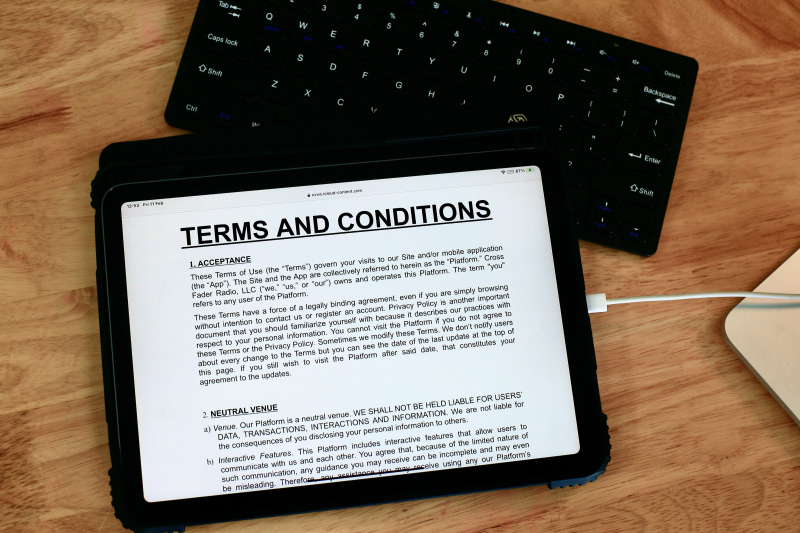
In Bill Clinton’s campaign for office, James Carville famously stated “it’s the economy, stupid.” In business “it’s the small print, stupid’. And the ‘small print’ in this case is found in your credit application and terms of trade. Having reviewed hundreds, if not thousands of applications and trading terms, I know just how boring they can be, but I assure you they are critical. Particularly when it comes to ensuring your security for payment and security for the return of your equipment. Why Your Terms of Trade Matter Your terms and conditions of trade establish a contract between you and...

16 September 2026
Does your asset protection structure really protect your assets?
For decades, Australian business owners have relied on a standard blueprint to protect their most valuable assets: splitting their business into two entities. Under this structure, an Asset Owner (a holding company) owns the expensive machinery, vehicles, or equipment, while an Operating/Trading Entity leases those assets to run the day-to-day business. The goal was simple—if the trading entity encountered financial trouble or was sued, the valuable assets remained safe in the holding company because the trading entity didn’t “own” them. The Personal Property Securities Act 2009 (PPSA) The Personal Property Securities Act 2009 (PPSA) fundamentally changed this equation. Under the...

24 August 2026
Understanding How Economic Sentiment Impacts Your Bottom Line
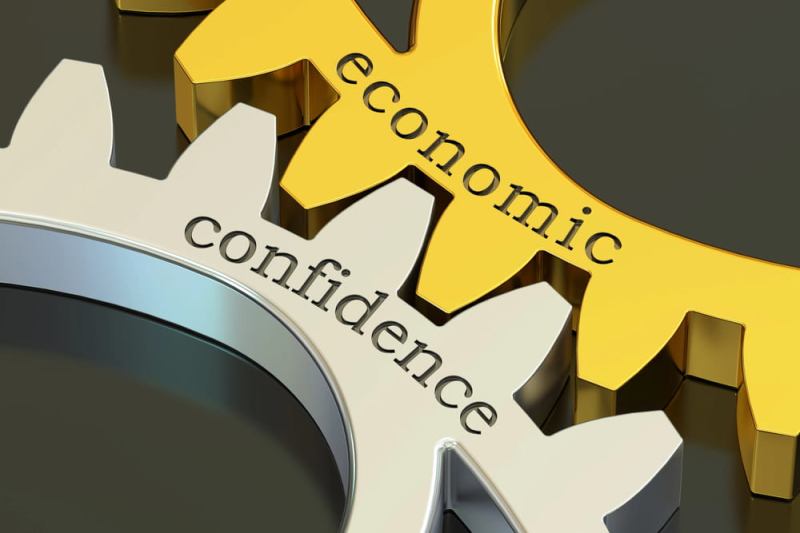
Your business doesn’t operate in isolation. The wider economic environment can influence how your customers spend, how lenders assess risk and how confident you feel about investing, borrowing and planning for growth and change. This is where economic sentiment can provide useful context. By understanding shifts in consumer confidence, business confidence and broader market conditions, you can make more informed decisions about your finances, operations and future plans. For business owners, understanding these shifts can provide valuable context when making financial and operational decisions. What is Economic Sentiment? Economic sentiment reflects how businesses and consumers perceive the current economy and...

17 August 2026
Commercial Property Finance: What Businesses Should Consider Before Approaching a Lender
Commercial property lending remains active despite a more restrictive borrowing environment. New ABS data shows the value of new business loan commitments for property purchases reached $27.2 billion in the June 2026 quarter, up 4.4% from the previous quarter and 18.9% compared with a year earlier. For businesses considering purchasing their own premises, acquiring an investment property or funding a broader expansion, that activity is a useful reminder that opportunities are still being pursued. But securing commercial property finance involves more than finding a competitive interest rate. The purpose of the property, the strength of the business, available security, cash...

19 July 2026
Carbon Footprint Data Requests Are Hitting WA Suppliers: How to Respond and Win Work
If you supply the resources sector in Western Australia, there’s a good chance you’ve received a request for carbon footprint data. A major mining or energy client, or one of their procurement platforms, asking for your emissions data, your energy use, your fuel records. Often with a short deadline and a questionnaire that makes little sense when it arrives out of the blue. It can feel like an unreasonable ask. You’re a crane hire company, a maintenance contractor, a transport operator, not a listed miner. Why is their reporting suddenly your problem? Here’s the short answer: it isn’t going away,...


9 July 2026
The Impact of AI on Jobs, Business and the Economy
Let’s explore the implications of AI on jobs, the economy, and specific industries such as accounting and marketing.

19 June 2026
What Australia’s mandatory climate reporting regime means for your business
Australia’s mandatory climate reporting era has officially begun. The country’s largest companies have now lodged their first reports under the Australian Sustainability Reporting Standards, anchored by Australian Accounting Standards Board Standard S2 (AASB S2). To understand where your business sits, it helps to know how the reporting groups are defined. Group 1 captures Australia’s largest companies Those meeting at least two of three size thresholds (revenue of $500 million or more, gross assets of $1 billion or more, or 500-plus employees), plus any organisation reporting under the National Greenhouse and Energy Reporting Act that exceeds 50,000 tonnes of carbon dioxide...

17 June 2026
How Cyber Risk Can Impact Access to Finance
If you’re preparing for a business loan, a capital raise, or an acquisition, a strong balance sheet may not be enough to secure finance approval. Today’s lenders and investors are looking beyond financial performance to understand the broader risks facing a business. Cyber risk has become a fundamental component of that assessment. As businesses rely more heavily on digital systems and data, questions around cybersecurity are now a standard part of due diligence. Failure to effectively address your cybersecurity risk can ultimately delay or derail funding and transaction decisions. Let’s explore why cyber risk may impact your ability to raise...

4 June 2026
What the Permanent Instant Asset Write-Off Means for Small Businesses
The Federal Budget has delivered some welcome certainty for small business owners, with the $20,000 Instant Asset Write-Off now set to become an ongoing feature of the tax system for eligible businesses. For many businesses, this removes the uncertainty that has surrounded the measure in recent years, where extensions and annual announcements often left owners waiting to see what would happen next. While the Instant Asset Write-Off is ultimately a tax measure, it can also influence business planning, investment decisions and funding requirements. What is the Instant Asset Write-Off? The Instant Asset Write-Off allows eligible small businesses to immediately deduct...