
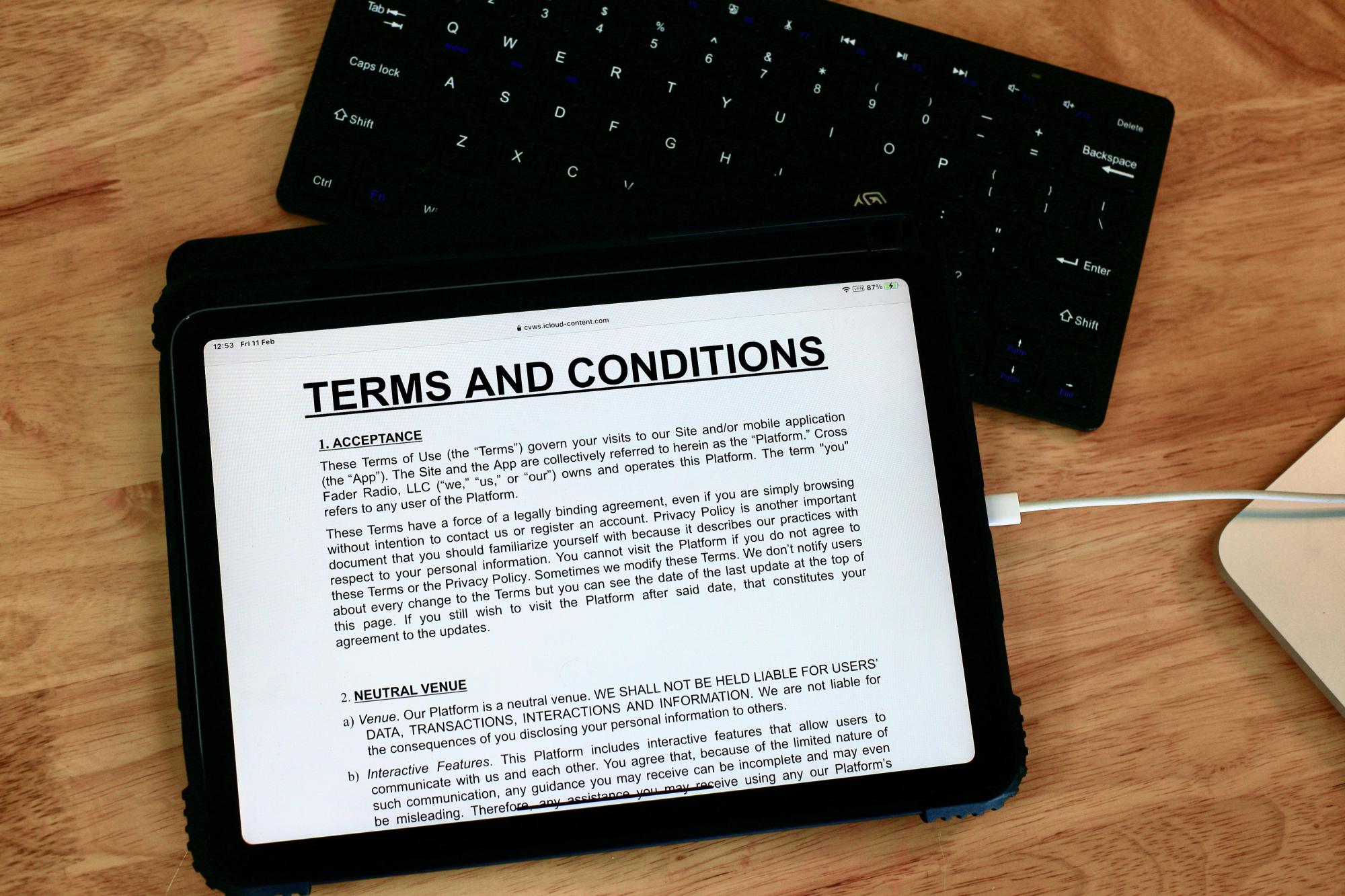
In Bill Clinton’s campaign for office, James Carville famously stated “it’s the economy, stupid.” In business “it’s the small print, stupid’.
And the ‘small print’ in this case is found in your credit application and terms of trade.
Having reviewed hundreds, if not thousands of applications and trading terms, I know just how boring they can be, but I assure you they are critical. Particularly when it comes to ensuring your security for payment and security for the return of your equipment.
Why Your Terms of Trade Matter
Your terms and conditions of trade establish a contract between you and your customer and vitally establish your rights and your security. In almost every case your terms of trade will determine the outcome of any legal dispute you have with your customer.
It’s not only what your terms say but how you conduct the transaction.
For example, it is common for a customer’s purchase order to contain the customer’s terms of supply, if you’re not careful, they may well override your terms.
The 10 Commandments of Terms of Trade
The following 10 commandments are practical steps you can take to ensure you understand the terms upon which you will trade with your customer.
Consider this practical – not legal – advice from almost 40 years of experience as an Insolvency Practitioner and PPSA advisor. Regrettably, I’ve had plenty of experience where terms of trade fail.
Thou shalt document your terms in writing
It should go without saying that your terms of trade need to be documented (and not by some AI tool, but by an experienced legal professional). After all, you get what you pay for, and a cheap internet download is very unlikely to meet all of your requirements.
A bespoke set of terms, drafted for your business is an extremely worthwhile investment.
Thou shalt incorporate security for payment and security for the return of thy equipment in thy terms
Including security in your terms is essential and creates the security you then register on the PPS register.
If you sell goods on credit, ensure you include a retention of title clause and make it an ‘all monies’ clause. For example, the supplier retains title in all goods supplied until such time as all goods have been paid for.
If you supply equipment (rent, hire etc), ensure you make it clear you retain ownership and title to the equipment.
To give you the best chance of recovering monies owed to you, include a charging clause in your terms. For example, the customer charges in favour of the supplier all of its interest in any personal property and any after acquired personal property.
Also consider adding director guarantees and if you do, ensure the directors provide security over their real and personal property in support of their guarantee. A guarantee backed with security is far more valuable than one that’s not.
Thou shalt bind thy customer
Your terms should make it crystal clear they bind your customer and will prevail for all future transactions.
This is irrespective of what the customer’s supply terms might say.
Thou shalt ensure thy customer signs
There’s no point in creating a set of world class terms and conditions if you don’t get your customer’s acknowledgement and agreement to them.
In signing your terms your customer is agreeing to them and very importantly they are granting you the security you have set out in those terms.
In the event you experience a customer’s insolvency and attempt to exercise your security rights (if you have registered them on the PPS register), the very first question you’ll be asked is to provide a copy of the signed terms and conditions.
Without signed terms it just makes it much harder to prove to an Insolvency Practitioner that the now insolvent customer had granted the security you are now claiming.
It’s also worthwhile ensuring the signatory has the authority to execute the terms on behalf of the customer.
Thou shalt keep a copy of thy signed terms
Keeping a copy of your signed terms is obviously critical in any attempted exercise of your security.
This is a far easier proposition in this digital age but keeping those old paper documents is just as important.
Thou shalt review ‘red lining’
Astute customers may take umbrage to some of your terms and ‘red line’ them. Crossing out your terms indicates your customer does not accept them. If you proceed to trade with your customer, the red lined terms will not apply.
Any such action by a customer needs to be reviewed very carefully and its impact on you, particularly regarding your security provisions needs to be considered. You can always push back and in extreme cases refuse to trade with the customer.
It’s not uncommon for customers to refuse to provide directors guarantees or to allow charges over their personal property. Do you proceed to trade with the customer with reduced security? It’s a commercial decision.
Thou shalt review purchase orders and terms of supply
Your customer’s terms and conditions of supply and/or their purchase order can impact your terms with devastating effect (particularly if your customer refuses to sign your terms but requires you to sign their supply terms).
Often your customer’s PO will change the trading terms (your terms) you’ve agreed with them.
A classic example involves your retention of title rights.
Your terms may well include a very fine retention of title clause, retaining title to the goods you supply until you receive payment. But your customer’s PO says that if you supply goods to them, you do so under the terms and conditions of the PO. And those terms say that title to the goods you supply will transfer to them on delivery, not payment. You’ve just lost your retention of title rights.
You should review all terms of supply and customer POs in detail to ensure they don’t undermine your terms, your security or your rights.
Thou shalt respond to PO’s
Given the possible issues with your customer’s supply terms, consider implementing an automated response making it clear that all goods supplied to them will be supplied under your terms of trade, not theirs.
This is where the ‘last shot’ doctrine comes into play:
- The first shot are your terms and conditions – your terms prevail.
- The second shot are your customer’s supply terms and conditions – their terms prevail.
- The third shot is your response to your customer’s PO and terms – your terms prevail.
You can see the importance of your third shot. Although not conclusive, the ‘last shot’ can help. Whoever fires the last shot will often determine whose trading terms will prevail.
Thou shalt remind customers of your trading terms
Whilst this is not a ‘fourth shot’ it can assist in any contractual dispute if you include on your delivery documentation, invoicing and statements that all goods supplied to your customer have been supplied in accordance with your trading terms.
You can make your trading terms easily available by adding them to your website.
Thou shalt have a legal review of thy trade documents
It’s false economy to ignore your trading terms.
Not only should all your trading terms be drafted by a qualified legal professional, but they should be regularly reviewed at least every 2 years.
Thou shalt comply with the PPSA
I’m sneaking in one final, critical commandment.
If you ever want to use your security, register it on the PPS Register.
With insolvencies on the rise, your security is critical. Remember, only registered security survives your customer’s insolvency and can be enforced. Unregistered security is lost on your customer’s insolvency and cannot be enforced.

How Customer Purchase Order Terms Put a $450,000 Engine at Risk
Diesel Control Systems (DCS) sells replacement diesel engines, offering their clients an engine exchange program. Excited about a new customer with an urgent need for an engine, DCS expedited their onboarding process.
DCS’ had a robust Retention of Title (ROT) clause in their Terms of Trade, which was designed to ensure they retain legal title to the engine until the purchase price has been paid in full. As this is a security interest, DCS complied with the PPSA and registered their interest against the customer.
The customer executed DCS’ credit application and agreed to DCS’ trading terms. They subsequently urgently issued a Purchase Order for a $450k engine which DCS supplied immediately.
The customer didn’t pay DCS, providing excuse after excuse until they collapsed into insolvency. As DCS had registered their security they should be able to enforce it and recover their engine right?
Not according to the customer’s Voluntary Administrator.
Unfortunately for DCS, their customer’s PO included three critical terms:
- that the customer’s terms of supply would apply,
- any supply of goods by DCS was to be viewed as an acceptance of those terms, and
- title to all goods supplied would pass to the customer on the their delivery, not their payment.
DCS’s failure to carefully review their customer’s supply terms means they have lost their security and now rank as an unsecured creditor owed many hundreds of thousands of dollars.
In this case the ‘second shot’, fired by the customer, prevails. The customer turned the table on DCS and a very simple and easy oversight has become an expensive mistake.
Terms of Trade Checklist: Protecting Your Business
The small print is always boring but it’s there for a reason – to protect your business.
A quick checklist might just help:
- Have your trading terms reviewed by a legal professional
- Always have your customer sign your credit application/terms and keep a copy. Watch for any red lining.
- Carefully review your customer’s supply agreement and PO terms.
- Make sure you take the last shot.
About PPSAdvisory
PPSAdvisory offers a complete service to ensure your asset protection structure truly protects your assets.
We’ll:
- Prepare a PPSA compliant Deed of Lease
- Perform the necessary general PPS registrations as well as specific Motor Vehicle registrations for each vehicle (if any).
- Address the likely timing issues caused by late registration
Just get in touch with our team at info@ppsadvisory.com.au to learn more.
About the Author, Simon Read
Simon Read is a Chartered Accountant with 30+ years’ experience in insolvency and over 16 years specialising in the PPSA. With hands-on experience across industries including retail, manufacturing, equipment sales and hires, construction, mining, forestry and agriculture, Simon is in the perfect position to help protect your property from the insolvency of your customer.