

Artificial Intelligence (AI) is no longer something only big tech companies talk about.
It’s already showing up in everyday business tools, from accounting software and customer service chatbots to marketing platforms and reporting dashboards.
For Australian businesses, the real question is not whether AI will have an impact, but how to use it in a sensible, practical way.
In this guide, we look at the impact of AI on jobs, the economy and key industries including accounting, finance, retail and marketing — and what business owners can do now to prepare.
What is the Business Impact of AI?
AI can do much more than automate simple, repetitive jobs. It can sort through large amounts of information, spot patterns, forecast trends and help teams make faster, better-informed decisions.
Used well, AI can help businesses save time, reduce manual errors, improve customer service and free people up to focus on higher-value work.
How is AU Changing the Global Economy?
AI is expected to have a major influence on the global economy over the coming years.
According to PwC, AI technologies are projected to contribute up to $15.7 trillion to the global economy by 2030. That growth is expected to come from better productivity, new products and services, and new ways of working.
Emerging markets may benefit strongly from AI because they can adopt newer technologies without being held back by older systems and processes.
For businesses, this technological revolution is another reminder that staying competitive now means staying open to smarter tools, better data and more flexible ways of operating.
Businesses that adopt AI thoughtfully are more to find efficiencies and new opportunities. Those that ignore it may find it harder to keep pace with competitors.
Will AI Replace Jobs?
One of the biggest questions people have is: will AI replace jobs?
The honest answer is that AI will change some jobs, reduce demand for certain tasks and create new types of work. According to The Future of Jobs Report 2023 by the World Economic Forum, AI and automation are expected to reshape a significant share of roles, creating new opportunities while also reducing demand for some existing jobs.
Routine and repetitive tasks are most likely to be automated first. At the same time, demand is growing for people who can manage AI tools, interpret data, solve problems, communicate clearly and make sound business decisions.
For business owners, the best approach is to support people through the change. That means investing in upskilling and reskilling so staff can use AI confidently and move into more complex, valuable work.
Understanding the impact of AI on jobs helps businesses plan ahead, rather than reacting when change is already underway.
How AI Is Affecting Different Industries
The impact of AI looks different from one industry to another. In some areas, AI supports people by making their work faster and more accurate. In others, it can take over tasks that were once done manually.
Manufacturing
In manufacturing, AI and robotics can improve production lines, reduce errors and support quality control. While this may reduce some manual work, it also creates a need for people who can operate, monitor and maintain these systems.
Healthcare
In healthcare, AI can support diagnostics, treatment planning, medical imaging and patient administration. It gives health professionals another tool to help them make informed decisions.
AI systems can review large volumes of information quickly and highlight patterns that may otherwise be missed.
It can also reduce time spent on repetitive administration, giving healthcare providers more room to focus on patient care.
Finance
In finance, AI is used for fraud detection, automated trading, risk analysis and personalised financial insights. This helps financial professionals spend more time on strategy, advice and client relationships.
Retail
In retail, AI can help businesses better manage stock, forecast demand and improve supply chain planning.
It can also improve the customer experience through personalised product recommendations, targeted promotions and quick support through chatbots or virtual assistants.
Accounting
In accounting, AI can take care of routine tasks such as data entry, reconciliation, invoice processing and basic reporting.
It can also support financial analysis and forecasting by reviewing large datasets and identifying useful trends.
AI-powered tools may also help detect unusual transactions, potential fraud and compliance issues earlier.
For accountants, this means more time can be spent on advice, planning and helping clients understand their numbers.
Administrative Services
In administration, AI can help with scheduling, document management, data entry and routine enquiries.
Virtual assistants can manage simple requests, organise calendars and support communication, helping administrative staff focus on tasks that need judgement, discretion and problem-solving.
Marketing
Marketing is one of the most visible areas where AI is being used by businesses of all sizes.
AI can analyse customer behaviour, segment audiences, suggest content ideas, personalise campaigns and help optimise advertising spend.
Used carefully, generative AI tools can also support content creation, customer engagement and faster campaign planning — while still needing human oversight for accuracy, brand voice and strategy.
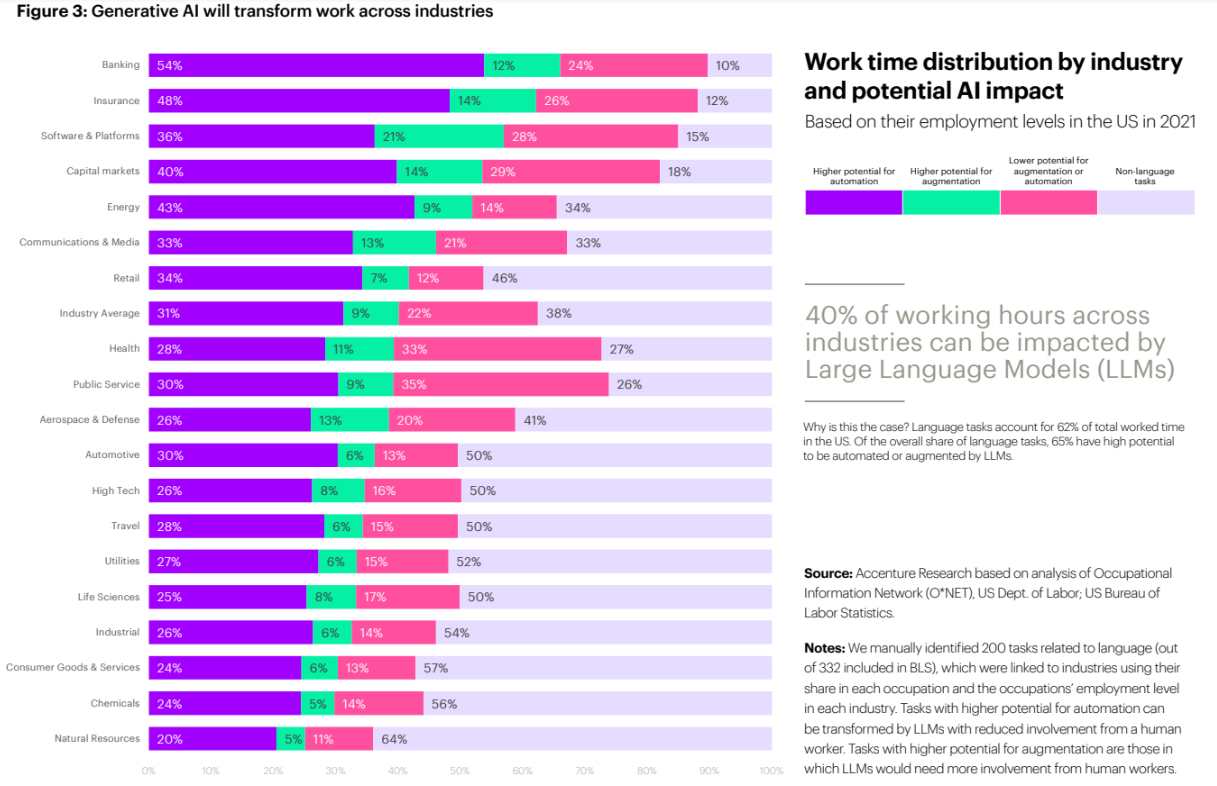 Image source: WeForum
How Businesses Can Prepare for AI
You don’t need to overhaul your whole business overnight. The most effective AI adoption usually starts with a clear problem, a practical plan and the right support.
Here are some practical steps to help your business prepare for AI:
1. Start by Reviewing Your Current Systems
Before investing in AI, look at the systems and processes you already use.
Where are people spending too much time on repetitive work? Where are errors happening? Where could better data help you make stronger decisions? These are often the best places to start.
2. Invest in Training and Education
AI works best when people understand how to use it safely and effectively.
Offer training, workshops or short courses that help your team build practical AI skills. This could include using AI tools, understanding data, writing better prompts or learning how to check AI-generated outputs.
The aim is not to turn everyone into a data scientist. It is to help your people feel confident using AI as a useful workplace tool.
3. Test AI with Small Pilot Projects
Rather than rolling AI out across the whole organisation at once, start small.
Choose one task or process where AI could make a noticeable difference, such as reporting, customer enquiries, invoice processing or marketing content planning. Measure the results before expanding further.
4. Work with the Right Experts
AI can be complex, so it helps to get advice from people who understand the technology, the risks and the commercial side of implementation.
This may include technology consultants, software providers, finance specialists or industry advisers.
The right guidance can help you choose tools that suit your business goals, budget and existing systems.
5. Focus on Data Quality and Management
AI is only as useful as the data it works
Clean, organised and well-managed data will make your AI tools more reliable. This includes data cleaning, integration and governance, especially if you are handling customer, financial or sensitive business information.

6. Encourage a Culture of Innovation
A healthy culture of innovation makes it easier for people to try new tools and improve the way work gets done.
Encourage your team to share ideas, test sensible improvements and learn from what does and does not work. AI adoption is much easier when people feel included in the process.
7. Link AI Projects to Business Goals
AI should support your business strategy, not distract from it. Be clear about what you want to achieve before investing in new tools.
For example, you might want to improve customer response times, reduce administration, strengthen reporting, increase sales efficiency or make better use of financial data.
8. Take Ethics, Privacy and Compliance Seriously
AI comes with important ethical and regulatory challenges.
Think about privacy, data security, transparency, bias and accountability before you roll out AI tools across your business.
A simple AI governance framework can help your team understand what AI can be used for, what needs approval and how outputs should be checked.
9. Explain the Benefits of AI Clearly
People are more likely to support AI when they understand why it is being introduced.
Explain how AI can reduce repetitive work, improve decision-making, support customers and give staff more time for strategic or creative tasks.
Clear communication can reduce uncertainty and help your team see AI as a tool that supports their work, rather than something being done to them.
10. Measure What’s Working
Once AI tools are in place, keep an eye on how they perform. Track simple measures such as time saved, error reduction, customer response times, cost savings or improvements in reporting.
Review the results regularly so you can improve your approach, stop what is not working and expand what is delivering value.
Preparing Your Workforce for an AI-Ready Future
The impact of AI on the workforce is not just about job losses or new technology. It is about how people, systems and businesses adapt together.
For many businesses, the best starting point is a practical one: identify where AI can save time, improve accuracy or support growth, then make sure your people have the training and tools to use it well.
If you are exploring new technology or equipment for your business, get in touch with our friendly team to discuss how tailored business financing options could support your next step.
Frequently Asked Questions About AI and the Workforce
How can businesses prepare for AI?
Businesses can prepare for AI by reviewing current processes, identifying repetitive tasks, improving data quality, training staff and starting with small pilot projects before scaling up.
How will AI affect jobs in the next decade?
AI is likely to automate some routine tasks, change many existing roles and create demand for new skills. Workers who can use AI tools, interpret information and apply human judgement will be well placed as work changes.
Will AI lead to job losses?
AI may reduce demand for some roles, especially where work is repetitive or rules-based. However, it can also create new jobs and make existing roles more productive when businesses invest in training and thoughtful implementation.
What industries will be most affected by AI?
AI is already affecting manufacturing, healthcare, finance, retail, accounting, administration and marketing. The level of impact depends on how much of the work involves data, repeatable processes or customer interaction.
What is the best way to start using AI in a small business?
Start with one clear business problem, such as reducing administration, improving reporting or speeding up customer responses. Test one tool, measure the results and expand only when it is delivering real value.