
As Australian businesses plan for the year ahead, the Australian Dollar forecast for 2026 is an important factor to consider.
Exchange rate movements influence cash flow, margins, and growth plans – often more than many businesses realise. While currency markets can feel outside your control, understanding the broader Australian dollar forecast can help you make more informed budgeting and funding decisions.
So, what’s the Australian dollar forecast for the coming months, and what could it mean for your business?
What’s the Value of the Australian Dollar?
The value of the Australian dollar (AUD) is determined by its exchange rate against other currencies, most commonly the US dollar. It is not fixed and moves constantly in response to global marketing conditions.
Several key factors shape the direction of the Australian dollar value:
- Interest rates: Decisions by the Reserve Bank of Australia (RBA) and other central banks, such as the US Federal Reserve, influence capital flows and investor sentiment. When Australian interest rates are relatively higher, the AUD may strengthen as global investors seek yield. Conversely, a narrowing interest rate differential can place downward pressure on the currency.
- Commodity prices: As a major exporter of resources like iron ore, coal, natural gas and gold, Australia’s currency is closely tied to global commodity prices — particularly from China and other key trading partners. Strong commodity prices can support the currency, while declines may have the opposite effect.
- Global economic conditions: The health of major economies and overall risk sentiment also play a role. Periods of global growth tend to support demand for Australian exports, while geopolitical uncertainty or economic slowdowns can increase currency volatility.
Understanding these underlying drivers provides useful context when considering the Australian dollar forecast for 2026 and how exchange rate movements may affect your business environment.
How Does the Australian Dollar Value Impact Local Businesses?
The value of the Australian dollar has a direct and tangible impact on local businesses – even on those that don’t trade internationally.
Fluctuations in the AUD can drive up the cost of imported goods and equipment, while also influencing cash flow, borrowing costs, and loan rates.
Changes in interest rates by the RBA and other central banks can directly impact financing decisions across all sectors.
Broader factors, such as government spending, taxation, and political stability, also shape investor confidence and can trigger currency volatility. Combined with global economic performance, these influences affect inflation, interest rates, and overall business confidence within Australia.
What’s the Australian Dollar Worth Today?
As of February 2026, the Aussie dollar is trading around 0.71 USD. The exact value fluctuates daily based on market conditions, interest rate expectations, and global economic factors.
You can check the current rate through the RBA website or major financial news platforms, such as Trading Economics.
Australian Dollar Economic Outlook
The Australian dollar has climbed steadily since its April 2025 lows, picking up pace since early January, when it sat at just 0.61 cents.
What the experts are saying:
Current forecasts from Australia’s major banks suggest the potential for modest gains in the Australian dollar through 2026, subject to global conditions.
In early January, Westpac, NAB, and CBA projected that the AUD would trade in the 0.69 to 0.72 range in 2026, with CBA allowing for upside to 0.73 if US tax cuts and improved risk sentiment flow through.
Meanwhile, private-sector polling from XS.com in late January indicated an average forecast of around 0.684 for the first half of 2026, rising to 0.70–0.71 by the fourth quarter.
However, by 12 February, the Aussie dollar had already climbed to 0.714 US cents (its highest value since February 2023) – which surpasses many of these early predictions.
The RBA’s Australian dollar outlook aligns with the positive growth forecasts of the major banks. The February Statement on Monetary Policy acknowledged that AUD strength is being driven by higher domestic rate expectations. They’ve built a 5% appreciation into their forecasts, which corresponds closely with where the currency has already moved since November 2025.
While there’s always uncertainty around geopolitical shocks or sudden shifts in commodity markets, the current baseline view is relatively stable, although currency markets remain sensitive to global developments. That gives businesses a clearer framework for planning, even though you still need to prepare for volatility.
Why is the Australian Dollar Rising?
Several factors are currently influencing the value of the Aussie dollar and contributing to the recent strength in the currency.
- Interest rate settings: The RBA has tightened monetary policy in response to inflation, lifting the cash rate to 3.85% in February 2026. When Australian interest rates are relatively higher than those in other major economies, this can support the AUD by attracting investment flows.
At the same time, expectations that the US Federal Reserve may ease policy later in the year have narrowed the interest rate gap between the two countries — another factor supporting the currency.
- Strong Commodity Prices: Australia’s position as a major exporter of iron ore, coal, LNG, and gold means commodity prices play a significant role in currency movements. Continued demand — particularly from China — has supported Australia’s terms of trade and contributed to currency stability in recent months.
- Domestic Economic Resilience & Investor Confidence: Relatively low unemployment and steady consumer activity have reinforced perceptions of economic resilience. A stronger external balance in 2025 has also supported overall confidence in the Australian economy.
- Global Risk Sentiment & US Dollar Movement: Currency markets are highly sensitive to global risk sentiment. Periods of improved confidence in global growth tend to support risk-sensitive currencies like the AUD. At the same time, any relative softness in the US dollar can amplify movements in the Australian dollar.
How Does a Stronger Aussie Dollar Impact Local Businesses?
A rising dollar impacts inflation, trade balances, and business costs across the economy.
On the positive side, a stronger AUD helps temper inflation. The RBA notes that the 5% appreciation since November 2025 could shave around 0.2 percentage points off the Consumer Price Index in the second half of 2026.
Imports become cheaper when the dollar strengthens. The ABS Import Price Index fell 2.1% in the December 2025 quarter, and further declines are likely if the dollar holds above 0.70. That’s good news for retailers and manufacturers relying on offshore inputs.
But there’s a trade-off. Treasury modelling indicates that sustained appreciation in the Australian dollar can place pressure on export earnings and broader economic activity
Export earnings for miners and farmers shrink when their US dollar revenue converts to fewer Australian dollars.
Tourism and education exports also take a hit. Tourism Research Australia warns that a 1% increase in the AUD cuts inbound visitor spending by $304 million annually. If Australia becomes too expensive, tourists and international students may look to more affordable destinations with weaker currencies.
For businesses, the impact depends entirely on your exposure to imports versus exports. If you’re buying more than you’re selling overseas, a stronger dollar is your friend. If you’re earning revenue in foreign currency, it’s a headwind you’ll need to manage.
Potential Risks to the Australian Dollar
While current forecasts suggest relative stability, currency markets remain sensitive to both domestic and global developments.
Geopolitical tensions, shifts in global trade policy, or changes in US tariff settings could influence investor sentiment and increase volatility. As the Australian dollar is often viewed as a “risk-sensitive” currency, it can move quickly in response to global uncertainty.
China’s economic performance will also remain an important factor. If demand for key commodities such as iron ore moderates, this could place some downward pressure on the currency.
Domestically, higher interest rates are expected to gradually slow parts of the economy later in 2026. The RBA has indicated that growth may ease over time, with unemployment projected to edge higher in the coming years. These conditions may influence both investor confidence and currency movements.
As always, the outlook remains subject to change — which reinforces the importance of scenario planning rather than relying on any single forecast.
Opportunities & Risks for WA Businesses
WA businesses face a particularly interesting set of dynamics. WA’s economy leans heavily on iron ore, LNG, gold and bauxite exports, and many of the state’s SMEs sit within mining supply chains.
Western Australian businesses operating in export-driven sectors are often more exposed to currency movements than their eastern states counterparts, making proactive planning particularly important in our market.
When the dollar strengthens alongside commodity prices, it’s a double-edged sword. Miners earn strong US dollar revenue, but if the AUD rally goes too far, it can erode their margins and lead to fewer contracts.
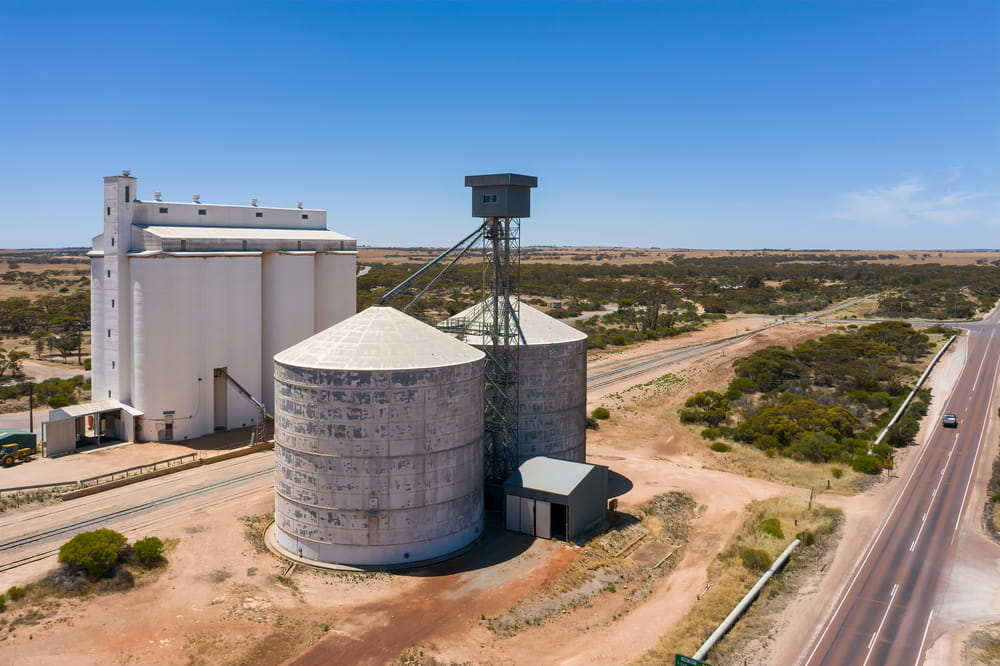
Agricultural business operators – in particular grain exporters around Geraldton and the CBH (Cooperative Bulk Handling) network – had a bumper 2025 harvest. But margins in 2026 could narrow if the dollar climbs another 5 to 7%. Hedging is important to lock in favourable exchange rates before they slip.
On the flip side, businesses that import capital equipment, electronics, machinery, or medical supplies are seeing costs fall by 5 to 7% compared with April 2025 lows. This offers potential for margin growth or the chance to pass savings through to customers and improve competitiveness.
With Western Australia’s investment pipeline sitting above $60 billion (according to the WA Government’s December 2025 Investor Update), importers of capital goods for mining and hydrogen projects could see activity increase.
Tourism and hospitality operators reliant on international visitors need to watch closely. A higher dollar can deter long-haul travellers, so diversifying your customer base or refining your product/service offering becomes more important.
Rising interest rates add another layer of complexity. The RBA’s tightening cycle means borrowing costs are climbing. Even if a stronger dollar reduces some input costs, those gains might not offset higher interest expenses. This is where smart structuring and flexible working-capital finance can make a real difference, giving you breathing room to manage cash flow while rates are still on the move.
Businesses with significant foreign currency exposure may wish to consider forward exchange contracts or options, which allow you to lock in AUD/USD rates and protect against further appreciation. Also, diversifying currency exposure by invoicing in Australian dollars where possible reduces your reliance on exchange rate movements.
And if you’re navigating currency risk alongside funding needs, talking to a finance broker about flexible funding lines can help you adapt to fluctuating exchange rates and maintain cash flow.
Trade finance for importers and exporters can smooth out the bumps when receivables take longer to convert or when you need to secure inventory ahead of exchange rate shifts.
Preparing Your Business for Currency Shifts
Currency movements might feel like something beyond your control, but here are some practical steps to manage risk and take advantage of new opportunities.
- Start by understanding your exposure: Map out where your revenue and costs sit in terms of currency. If you’re heavily import-dependent, a stronger dollar is working in your favour. If you’re exporting or competing with foreign suppliers, you’re facing margin pressure. Knowing your position lets you plan accordingly.
- Consider forward contracts or options: this will enable you to lock in exchange rates. If you’ve got significant foreign currency receivables or payables coming in the next six to twelve months, locking in a rate near current levels (around 0.71) can remove uncertainty and protect your cash flow. These instruments aren’t just for large corporates; they’re accessible to SMEs and can be tailored to your specific needs.
- Diversify where you can: If you’re invoicing overseas customers, explore opportunities to invoice in Australian dollars instead of foreign currency. That shifts the exchange rate risk to the buyer. It won’t always be possible, but it’s worth negotiating where you have leverage.
- Build currency sensitivity into your budgets and forecasts: Run scenarios for both a weaker dollar (say, 0.65) and a stronger dollar (say, 0.73). Understand how each scenario affects your margins, pricing, and cash flow. That way, you’re not scrambling if the exchange rate moves sharply in either direction.
- Engage an expert: Talk to a professional who understands both finance and currency risk. At Ledge Finance, we work alongside businesses to structure funding solutions that account for the full picture, including exchange rate volatility and working capital needs.
Exchange rate movements are outside any individual business’s control. What is within your control is how you plan for them.
That may involve:
- Reviewing your foreign currency exposure
- Building exchange rate sensitivity into your budgets
- Considering forward exchange or hedging strategies where appropriate
- Ensuring funding structures provide sufficient working capital flexibility
At Ledge Finance, we support Western Australian businesses by working collaboratively with their accountants and advisers to structure finance solutions aligned with operational realities, including currency volatility and interest rate movements.
To discuss how the current Australian dollar outlook may affect your business planning, get in touch with our team for a chat.
Frequently Asked Questions
What is the value of the Australian dollar today?
As of February 2026, the Australian dollar is trading around 0.71 USD. The exact value fluctuates daily based on market conditions, interest rate expectations, and global economic factors.
When will the Australian dollar rise again?
The Australian dollar has risen since its April 2025 lows, and many forecasters expect relative strength to continue into 2026, depending on interest rate and commodity trends.
Recent analysis suggests the currency is well-positioned for further gains if global conditions remain supportive.
Why does the Australian dollar fluctuate so much?
The Australian dollar is considered a ‘risk currency’ and a ‘commodity currency,’ which makes it sensitive to global economic sentiment and commodity prices.
When investors feel confident about global growth, they tend to buy Aussie dollars. When risk aversion rises, they sell.
The currency also responds to interest rate differentials between Australia and other countries (particularly the US), China’s economic performance, and Australia’s terms of trade. These factors shift constantly, creating volatility.
What is the Australian dollar forecast for the next six months?
The outlook for the next six months is cautiously optimistic. Forecasters expect the AUD to trade in the 0.68 to 0.73 range, with a base case around 0.71. The Reserve Bank’s tightening cycle, strong commodity prices, and a narrowing policy gap with the US Federal Reserve are all supportive.
However, risks remain, including potential geopolitical tensions, weaker Chinese demand, and a domestic economic slowdown later in the year.